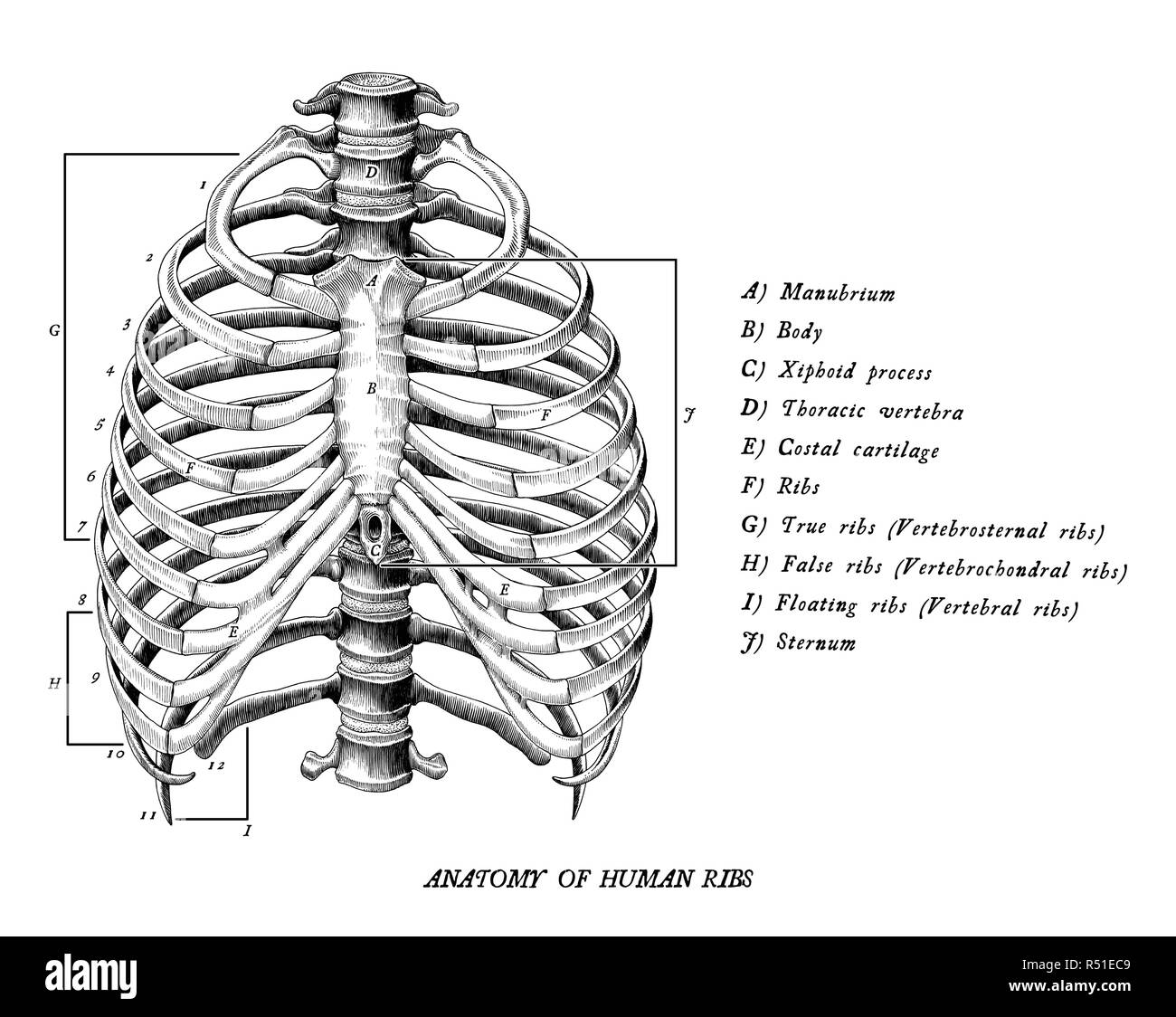
Anatomy Of Ribs - Choose from 500 different sets of anatomy of the ribs flashcards on quizlet.. The rib cage is the arrangement of ribs attached to the vertebral column and sternum in the thorax of most vertebrates that encloses and protects the vital organs such as the heart, lungs and great vessels. The ribs are curved, flat bones which form the majority of the thoracic cage. The purpose of the rib cage is to be the attachment for our respiratory muscles in order to aid in breathing, as well as, serve as aprotective shield for the vital organs (the heart, lunges, and major blood vessels).to achieve these purposes, the rib cage is composed of 12 ribs. They make up the lateral part of our body, its anterior and posterior wall and they entirely build the lateral parts of the chest wall. The sternum is a flat bone that is made up of three parts, the (1) manubrium, (2) body, and the (3) xiphoid process.
The rib cage surrounds the lungs and the heart, serving as an important means of bony protection for these vital organs.in total, the rib cage consists of the 12 thoracic vertebrae and the 24 ribs, in addition to the sternum. We reviewed avicenna's canon and his viewpoints on the anatomy of the rib bones and their fractures and compared it with conventional medicine. They articulate with the vertebral column posteriorly, and terminate anteriorly as cartilage (known as costal cartilage). There are twelve (12) pairs of ribs and all articulate posteriorly with the thoracic vertebrae. With each succeeding rib, from the first, or uppermost, the curvature of the rib cage becomes more open.
Human Ribs High Resolution Stock Photography And Images Alamy from c8.alamy.com We reviewed avicenna's canon and his viewpoints on the anatomy of the rib bones and their fractures and compared it with conventional medicine. The first seven true ribs connect to the sternum via the costal cartilages by day 45. The rib cage surrounds the lungs and the heart, serving as an important means of bony protection for these vital organs.in total, the rib cage consists of the 12 thoracic vertebrae and the 24 ribs, in addition to the sternum. As part of the bony thorax, the ribs protect the internal thoracic organs. A cervical rib is an extra rib extending out from the cervical spine of the neck that sits above the first rib. Ribs anatomy the average skeleton contains 24 individual ribs, formed in 12 pairs, and they are divided into three main categories: There are twelve (12) pairs of ribs and all articulate posteriorly with the thoracic vertebrae. Each pair is numbered based on their attachment to the sternum, a bony process at the front of the rib cage which serves as an anchor point.
There are twelve (12) pairs of ribs and all articulate posteriorly with the thoracic vertebrae.
The joint of head of rib (costocorporeal joint) is the articulation between the rib head and vertebral body. The ribs and sternum make up what is called the 'ribcage.' the ribcage protects the lungs, blood vessels, and heart. Contributing to their role in protecting the internal thoracic organs. There are twelve (12) pairs of ribs and all articulate posteriorly with the thoracic vertebrae. The rib cage is collectively made up of long, curved. It is made up of 12 pairs of ribs. Rib development begins at 9 weeks; The ribs are a set of twelve paired bones which form the protective 'cage' of the thorax. The rib cage, also distinguished as the thoracic cage, is a bony and cartilaginous structure which forming a core portion of the human skeleton. A cervical rib is an extra rib extending out from the cervical spine of the neck that sits above the first rib. True ribs, false ribs, and floating ribs. The first seven true ribs connect to the sternum via the costal cartilages by day 45. The first seven ribs progressively increase in length, the lower five ribs then begin to decrease in length.
They articulate with the vertebral column posteriorly, and terminate anteriorly as cartilage (known as costal cartilage). Ten of the twelve ribs connect to strips of hyaline cartilage on the anterior side of the body. The ribs are curved, flat bones which form the majority of the thoracic cage. The ribs and sternum make up what is called the 'ribcage.' the ribcage protects the lungs, blood vessels, and heart. The lungs are two separate but connected organs located in the upper chest, covered by the rib cage.
Ribs Anatomy Types Ossification Clinical Significance How To Relief from www.howtorelief.com The lungs are two separate but connected organs located in the upper chest, covered by the rib cage. Anatomy the rib cage is a bony structure found in the chest (thoracic cavity). The anatomy of the human ribs (costae) are one of the integral parts of the chest wall; There are twelve (12) pairs of ribs and all articulate posteriorly with the thoracic vertebrae. Ribs the ribs partially enclose and protect the chest cavity, where many vital organs (including the heart and the lungs) are located. The vast majority of human beings are born with 24 ribs, 12 on each side of the body. A human rib cage consists of 24 ribs, the sternum, costal cartilages, and the 12 thoracic vertebrae. They are extremely light, but highly resilient;
The rib cage is collectively made up of long, curved.
The first seven true ribs connect to the sternum via the costal cartilages by day 45. The ribs perform vital functions in the body, protecting organs and supporting the breathing process. The heart is a muscle at the center of your circulatory system. Related posts of abdominal diagram with ribs anatomy of outer ear diagram. The ribs and sternum make up what is called the 'ribcage.' the ribcage protects the lungs, blood vessels, and heart. Anatomy the rib cage is a bony structure found in the chest (thoracic cavity). We reviewed avicenna's canon and his viewpoints on the anatomy of the rib bones and their fractures and compared it with conventional medicine. Lateral view of a pair of ribs articulating with the thoracic vertebrae. They articulate with the vertebral column posteriorly, and terminate anteriorly as cartilage (known as costal cartilage). The rib cage, also distinguished as the thoracic cage, is a bony and cartilaginous structure which forming a core portion of the human skeleton. The vast majority of human beings are born with 24 ribs, 12 on each side of the body. True ribs, false ribs, and floating ribs The first seven ribs progressively increase in length, the lower five ribs then begin to decrease in length.
Living in greenville and curious about the ribs and breathing anatomy? The sternum is a flat bone that is made up of three parts, the (1) manubrium, (2) body, and the (3) xiphoid process. The first seven ribs progressively increase in length, the lower five ribs then begin to decrease in length. Gross anatomy there are 12 pairs of ribs which are separated by intercostal spaces. The first seven true ribs connect to the sternum via the costal cartilages by day 45.
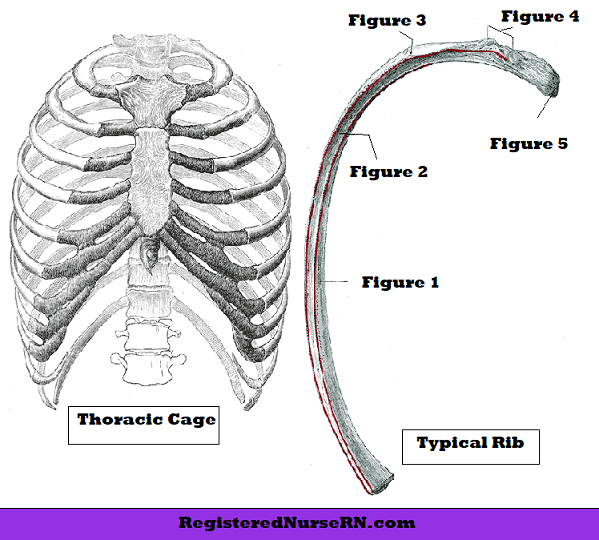
Rib Bone Anatomy Quiz from www.registerednursern.com 12 photos of the anatomy of ribs and its related area. Ten of the twelve ribs connect to strips of hyaline cartilage on the anterior side of the body. Each pair is numbered based on their attachment to the sternum, a bony process at the front of the rib cage which serves as an anchor point. They articulate with the vertebral column posteriorly, and terminate anteriorly as cartilage (known as costal cartilage). The ribs and sternum make up what is called the 'ribcage.' the ribcage protects the lungs, blood vessels, and heart. The rib cage surrounds the lungs and the heart, serving as an important means of bony protection for these vital organs.in total, the rib cage consists of the 12 thoracic vertebrae and the 24 ribs, in addition to the sternum. The rib cage is formed by the vertebral column, ribs, and sternum and encompasses the heart and lungs. Two of the most notable organs behind the left side of the rib cage are the left lung and the spleen.
The ribs perform vital functions in the body, protecting organs and supporting the breathing process.
The anatomy of the human ribs (costae) are one of the integral parts of the chest wall; The sternum is a flat bone that is made up of three parts, the (1) manubrium, (2) body, and the (3) xiphoid process. On an individual rib, one end has various processes, facets, and bumps. Rib development and normal anatomy twelve paired ribs develop from cartilaginous costal processes of the developing thoracic vertebrae. The heart is a muscle at the center of your circulatory system. It is made up of 12 pairs of ribs. Anatomy of outer ear diagram 12 photos of the anatomy of outer ear diagram anatomy of. 12 photos of the anatomy of ribs and its related area. Contributing to their role in protecting the internal thoracic organs. The rib cage surrounds the lungs and the heart, serving as an important means of bony protection for these vital organs.in total, the rib cage consists of the 12 thoracic vertebrae and the 24 ribs, in addition to the sternum. With each succeeding rib, from the first, or uppermost, the curvature of the rib cage becomes more open. Choose from 500 different sets of anatomy of the ribs flashcards on quizlet. The first seven true ribs connect to the sternum via the costal cartilages by day 45.
Share :
Post a Comment
for "Anatomy Of Ribs - Choose from 500 different sets of anatomy of the ribs flashcards on quizlet."

Post a Comment for "Anatomy Of Ribs - Choose from 500 different sets of anatomy of the ribs flashcards on quizlet."